
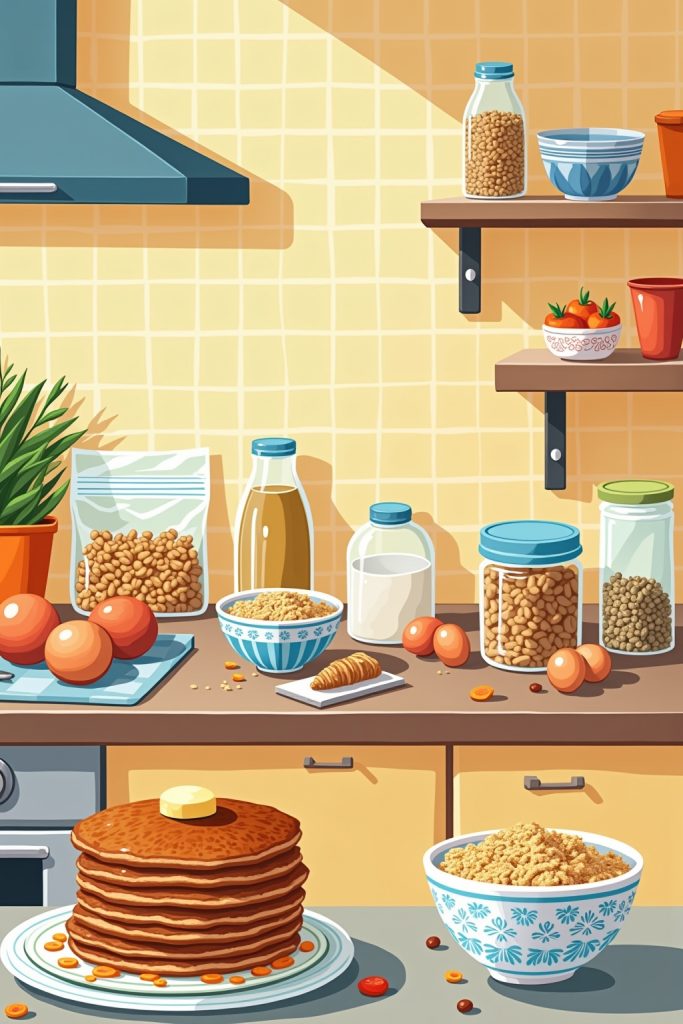
Du möchtest dein Frühstück günstiger gestalten, ohne auf Genuss und Nährwert zu verzichten? Dieser umfassende Leitfaden liefert dir 10 praxiserprobte Spartipps, die dir helfen, deine Ausgaben für die erste Mahlzeit des Tages effektiv zu reduzieren. Diese Ratschläge sind essenziell für alle, die ihren Geldbeutel schonen und gleichzeitig eine gesunde und sättigende Grundlage für den Tag schaffen möchten.
Das sind die beliebtesten Top 10 Frühstücksbuch Produkte





10 Budget-Tipps für dein Frühstück
Das Frühstück ist oft die erste und eine der wichtigsten Mahlzeiten des Tages. Doch tägliche Ausgaben für Kaffee-to-go, abgepackte Müsli-Riegel oder teure Frühstücksangebote in Cafés können sich schnell summieren. Mit diesen 10 Budget-Tipps für dein Frühstück kannst du bares Geld sparen, ohne Abstriche bei Qualität und Geschmack machen zu müssen.
Vorbereitung ist der Schlüssel: Meal Prep für dein Frühstück
Der Grundstein für ein budgetfreundliches Frühstück liegt in der guten Vorbereitung. Wenn du deine Mahlzeiten für die Woche im Voraus planst und vorbereitest, vermeidest du impulsive und teure Einkäufe unterwegs. Meal Prepping hilft dir auch, Lebensmittelverschwendung zu reduzieren, da du genau weißt, was du brauchst und wie viel davon.
- Haferflocken über Nacht (Overnight Oats): Dies ist eine der einfachsten und kostengünstigsten Frühstücksvarianten. Mische Haferflocken mit Milch (oder einer pflanzlichen Alternative), Joghurt oder Wasser in einem Glas oder Behälter. Füge nach Belieben Früchte, Samen oder Nüsse hinzu. Über Nacht im Kühlschrank eingeweicht, sind sie am Morgen fertig zum Verzehr und extrem sättigend.
- Muffins und Scones im Voraus backen: Backe eine größere Menge an gesunden Muffins oder Scones am Wochenende. Diese lassen sich gut einfrieren und du kannst sie morgens einfach auftauen oder kurz erwärmen. Verwende Vollkornmehl und füge Obst oder Gemüse hinzu, um sie nahrhafter zu machen.
- Frühstücks-Burritos oder Wraps: Fülle Vollkorn-Tortillas mit einer Mischung aus Rührei, schwarzen Bohnen, Gemüse und Käse. Diese Burritos können gut vorbereitet und eingefroren werden. Morgens einfach in der Mikrowelle oder im Ofen aufwärmen.
Intelligente Einkaufsstrategien
Deine Einkaufsweise hat einen direkten Einfluss auf dein Frühstücksbudget. Durchdachte Einkaufslisten, der Vergleich von Preisen und das Nutzen von Angeboten können erhebliche Einsparungen mit sich bringen.
- Großpackungen kaufen: Produkte wie Haferflocken, Reis, Nudeln und Hülsenfrüchte sind in größeren Packungen oft deutlich günstiger pro Kilogramm. Lagere diese Produkte richtig, um sie lange frisch zu halten.
- Angebote und Rabatte nutzen: Halte Ausschau nach Sonderangeboten in Supermärkten, insbesondere für Produkte, die du regelmäßig zum Frühstück konsumierst. Wochenangebote oder Kundenkarten können sich lohnen.
- Eigenmarken bevorzugen: Supermarkt-Eigenmarken sind in der Regel preiswerter als Markenprodukte, bieten aber oft eine vergleichbare Qualität. Probiere verschiedene Eigenmarken aus, um deine Favoriten zu finden.
- Saisonal und regional einkaufen: Obst und Gemüse der Saison sind meist günstiger und schmecken besser. Kaufe auf lokalen Märkten oder in Geschäften, die regionale Produkte führen.
Sparsame Frühstücksoptionen im Detail
Es gibt zahlreiche Frühstücksoptionen, die sowohl kostengünstig als auch nährstoffreich sind. Der Fokus liegt hierbei auf Grundnahrungsmitteln, die vielseitig einsetzbar sind und preiswert erworben werden können.
- Haferflocken als Basis: Wie bereits erwähnt, sind Haferflocken ein wahres Superfood für Sparfüchse. Sie liefern Ballaststoffe, halten lange satt und sind extrem günstig. Du kannst sie pur mit Wasser oder Milch genießen, oder sie zu Porridge, Müsli oder eben Overnight Oats verarbeiten.
- Eier – das Proteinwunder: Eier sind eine hervorragende Proteinquelle und relativ preiswert. Rührei, Spiegelei, gekochte Eier oder Omeletts sind schnelle und sättigende Frühstücksoptionen. Du kannst sie mit Gemüse wie Tomaten, Paprika oder Spinat ergänzen.
- Brot und Aufstriche: Vollkornbrot ist eine gesunde und sättigende Basis. Anstatt teure Fertigaufstriche zu kaufen, kannst du eigene machen. Quark oder Frischkäse lässt sich mit Kräutern, Gewürzen oder püriertem Gemüse verfeinern. Auch Hüttenkäse oder ein einfacher Erdnussbutter-Aufstrich sind gute Optionen.
- Milch und pflanzliche Alternativen: Milch ist eine gute Kalziumquelle. Wenn du eine pflanzliche Alternative suchst, sind Soja-, Hafer- oder Mandelmilch oft im Angebot erhältlich. Vergleiche die Preise, da diese stark variieren können.
- Obst und Gemüse: Integriere saisonales Obst und Gemüse in dein Frühstück. Äpfel, Bananen, Karotten oder saisonale Beeren sind oft preiswert und liefern wichtige Vitamine und Ballaststoffe.
Die Macht von Hülsenfrüchten und Getreide
Hülsenfrüchte und Vollkorngetreide sind nicht nur extrem gesund und sättigend, sondern auch unglaublich günstig. Sie sind oft unterschätzte Frühstückszutaten, die dein Budget schonen können.
- Bohnen und Linsen im Frühstück: Ja, Bohnen und Linsen können ein herzhaftes Frühstück ausmachen! Eine kleine Portion gekochte schwarze Bohnen mit etwas Gewürzen, Salsa und einem Spiegelei ist ein nahrhaftes und preiswertes Gericht. Auch rote Linsen lassen sich zu einer Art Brei verarbeiten.
- Vollkornreis oder Hirse: Gekochter Vollkornreis oder Hirse kann als Basis für ein warmes Frühstück dienen. Ähnlich wie Haferflocken kannst du sie mit Früchten, Zimt und Nüssen verfeinern. Sie sind eine tolle Alternative, wenn du Abwechslung suchst.
Selbstgemachte Getränke statt teurer Convenience-Produkte
Kaffee, Säfte und Smoothies aus dem Supermarkt oder Café können schnell ins Geld gehen. Selbermachen ist hier die Devise.
- Kaffee und Tee zu Hause zubereiten: Der tägliche Kaffee-to-go ist einer der größten Kostentreiber. Bereite deinen Kaffee oder Tee zu Hause zu und nimm ihn in einer wiederverwendbaren Thermoskanne mit. Kaufe Kaffeebohnen oder Teebeutel in größeren Packungen.
- Eigene Smoothies mixen: Anstatt fertige Smoothies zu kaufen, kaufe die Zutaten einzeln. Gefrorene Früchte sind oft günstiger und halten sich länger. Eine Banane, etwas Milch oder Joghurt und gefrorene Beeren ergeben einen leckeren und günstigen Smoothie.
- Wasser als Durstlöscher: Leitungswasser ist die günstigste und gesündeste Option, um deinen Flüssigkeitsbedarf zu decken. Du kannst es mit etwas Zitrone, Minze oder Gurke aufpeppen.
Die Rolle von Resten am Morgen
Werfe Reste vom Abendessen nicht weg! Viele herzhafte Gerichte lassen sich auch hervorragend zum Frühstück umfunktionieren und sparen dir somit Zeit und Geld.
- Reste vom Vortag: Eine kleine Portion Gemüsepfanne, Reis mit Linsen oder eine Handvoll Nudeln vom Abendessen können am Morgen aufgewärmt werden und bilden eine sättigende und kostengünstige Mahlzeit.
- Suppen und Eintöpfe: Eine herzhafte Gemüsesuppe oder ein Linseneintopf eignen sich ebenfalls gut als wärmendes Frühstück, besonders in den kälteren Monaten.
Minimalismus beim Frühstück – Weniger ist oft mehr
Manchmal ist die einfachste Lösung auch die günstigste. Konzentriere dich auf wenige, aber hochwertige und sättigende Grundnahrungsmittel.
- Fokus auf Grundnahrungsmittel: Setze auf Produkte wie Haferflocken, Eier, Brot, saisonales Obst und Gemüse. Diese sind meist preiswert und vielseitig einsetzbar.
- Vermeide unnötige Extras: Fertigmüsli mit viel Zucker, Schokocroissants oder teure Aufstriche sind oft Luxusgüter, die dein Budget belasten. Verzichte lieber auf diese, um Geld zu sparen.
DIY-Gewürze und Süßungsmittel
Auch bei Gewürzen und Süßungsmitteln lässt sich sparen, wenn du sie clever einsetzt.
- Zimt und andere Gewürze: Zimt ist ein günstiges Gewürz, das Porridge, Joghurt und Obst einen wunderbaren Geschmack verleiht und gesundheitliche Vorteile hat. Andere Gewürze wie Kardamom oder Muskatnuss können ebenfalls Abwechslung bringen.
- Honig und Ahornsirup sparsam verwenden: Diese Süßungsmittel sind teuer. Wenn du süßen möchtest, verwende sie sparsam oder greife auf günstigere Alternativen wie Apfelmus zurück.
Langfristige Planung und Konsistenz
Budget-Tipps für dein Frühstück funktionieren am besten, wenn du sie konsequent umsetzt. Eine langfristige Planung und die Gewohnheit, dein Frühstück zu Hause zuzubereiten, werden sich über die Zeit auszahlen.
- Regelmäßiger Blick auf dein Budget: Überprüfe regelmäßig deine Ausgaben für Lebensmittel und passe deine Einkaufs- und Kochgewohnheiten bei Bedarf an.
- Die Gewohnheit entwickeln: Je öfter du dein Frühstück vorbereitest und zu Hause isst, desto mehr zur Gewohnheit wird es, was dir hilft, langfristig Geld zu sparen.
Übersicht der Budget-Tipps für dein Frühstück
| Kategorie | Spartipp | Vorteile | Praktische Umsetzung |
|---|---|---|---|
| Vorbereitung | Meal Prep (Overnight Oats, Muffins) | Zeitersparnis, Kostenkontrolle, weniger Lebensmittelverschwendung | Am Wochenende Portionen vorbereiten und im Kühlschrank lagern. |
| Einkauf | Großpackungen & Eigenmarken | Geringerer Kilopreis, Kosteneffizienz | Preise vergleichen und größere Mengen kaufen, wenn Platz vorhanden. |
| Grundnahrungsmittel | Haferflocken, Eier, Vollkornbrot | Sättigend, nahrhaft, preiswert | Als Basis für viele Frühstücksgerichte verwenden. |
| Getränke | Selbstgemachte Kaffee/Tee, Wasser | Deutlich geringere Kosten als Convenience-Produkte | Kaffee/Tee zu Hause brühen, Leitungswasser trinken. |
| Reste | Vom Abendessen übrig gebliebenes Essen | Vermeidung von Lebensmittelverschwendung, zusätzliche Mahlzeit | Herzhafte Reste am Morgen aufwärmen. |
Das sind die neuesten Frühstücksbuch Produkte
FAQ – Häufig gestellte Fragen zu Unlock 10 budget tips for breakfast that save money
Was ist die günstigste Frühstücksoption überhaupt?
Die wohl günstigste Frühstücksoption sind Haferflocken, zubereitet mit Wasser. Dies ist extrem preiswert und liefert dennoch wichtige Ballaststoffe und Energie.
Wie kann ich meine Frühstücksroutine ändern, um Geld zu sparen?
Der Schlüssel ist die Vorbereitung. Anstatt jeden Morgen spontan zu entscheiden oder etwas zu kaufen, plane dein Frühstück im Voraus. Meal Prepping am Wochenende hilft dir, Zeit und Geld zu sparen.
Sind selbstgemachte Smoothies wirklich günstiger als gekaufte?
Ja, in den allermeisten Fällen sind selbstgemachte Smoothies deutlich günstiger. Du hast die volle Kontrolle über die Zutaten und kannst saisonale oder gefrorene Früchte nutzen, die preiswerter sind.
Was mache ich, wenn ich morgens wenig Zeit habe?
Meal Prep ist deine Antwort. Overnight Oats sind in wenigen Minuten zubereitet und am nächsten Morgen fertig. Auch hartgekochte Eier oder vorbereitete Frühstücks-Muffins sind schnelle Optionen für wenig Zeit.
Wie kann ich mein Frühstück abwechslungsreicher gestalten, ohne mehr auszugeben?
Nutze Gewürze wie Zimt, Kardamom oder Muskatnuss, um deinen Grundnahrungsmitteln wie Haferflocken oder Rührei verschiedene Geschmacksrichtungen zu verleihen. Auch verschiedene Obstsorten saisonal zu kombinieren, bringt Abwechslung.
Sind Fertigmüsli wirklich so teuer, wie sie scheinen?
Ja, viele Fertigmüslis, insbesondere solche mit viel Zucker, Trockenfrüchten oder Schokolade, sind im Vergleich zu ihren Grundzutaten (wie Haferflocken) teuer. Selbstgemachtes Müsli ist meist die kostengünstigere und gesündere Alternative.
Welche Lebensmittel sind generell gut für ein budgetfreundliches und gesundes Frühstück?
Ganz oben auf der Liste stehen Haferflocken, Eier, Vollkornbrot, saisonales Obst und Gemüse, Hülsenfrüchte (wie Bohnen für herzhafte Optionen) und Milch oder preiswerte pflanzliche Alternativen.


